
Workshop 7: Developing the musical inspiration for this workshop:
Art workshop in conjunction with Sophie Lee
Initially Sophie and I chatted about what format the workshop should take. Not having much research to go on we brainstormed about how we thought the workshop might go. I was hoping that the music would be emotive and suggestive for art making (abstract but accessible) but not prescriptive (containing lyrics that might distract too much).
Initally Sophie suggested that the theme: ‘The Four Seasons’ and the following four pieces:
1. Song without words, Op. 62 No. 6 “Spring Song” – Mendelssohn https://www.youtube.com/watch?v=QPwNbEySjG4
2. Summertime by George Gershwin https://www.youtube.com/watch?v=obC5waiXlIQ
3. Autumn leaves by Joseph Kosma https://www.youtube.com/watch?v=HQ_IUUtDJW8
or ‘Autumn’ from Vivaldi’s Four Seasons arranged for solo piano https://www.youtube.com/watch?v=4CxYuiUGYTU
4. Winterszeit I by Robert Schumann https://www.youtube.com/watch?v=PBLnZmR5nwQ
After further chats with Sophie about the proposed content and format of the music inspired workshop Sophie suggested that we collaboratively explore the theme of water. This would be an open enough topic but still a simple one to engage with we hoped.
To this end Sophie did some further thinking and suggested that the music inspiration could focus on the music of Claude Debussy and Maurice Ravel. This was because she said they had composed a variety of piano pieces and orchestral excerpts that depict the theme of water in different ways – from rain to the sea to reflections in the water.
As Debussy and Ravel are both impressionist composers this could also link in with impressionism in relation to music and art, and explore paintings by the impressionists like Claude Monet.
When we talked specifically about how the workshop would be structured I thought that we should do one or two quick demonstration pieces to elaborate more on the improvisation that it might entail to respond artistically to music with only a variety of images of water in our heads.
So Sophie suggested that our demonstration music pieces would be the opening of ‘Jardin sous la Pluie’ (Garden while raining – faster music) and then ‘Reflect dans l’eau, (Reflections in the water- slower music)’ as they have contrasting moods.
In the end Sophie chose her final reportoire of music from the following excerpts:
Debussy: Jardin Sous La Pluie https://www.youtube.com/watch?v=w-1ERRRUM-c
Debussy: Reflects Dans L’eau https://www.youtube.com/watch?v=U_H4sh3Crq0
Debussy: La mer https://www.youtube.com/watch?v=hlR9rDJMEiQ
Ravel: Jeux D’eau https://www.youtube.com/watch?v=fm9mGsnEyCQ
Ravel: https://www.youtube.com/watch?v=bTYUyDjVCRU
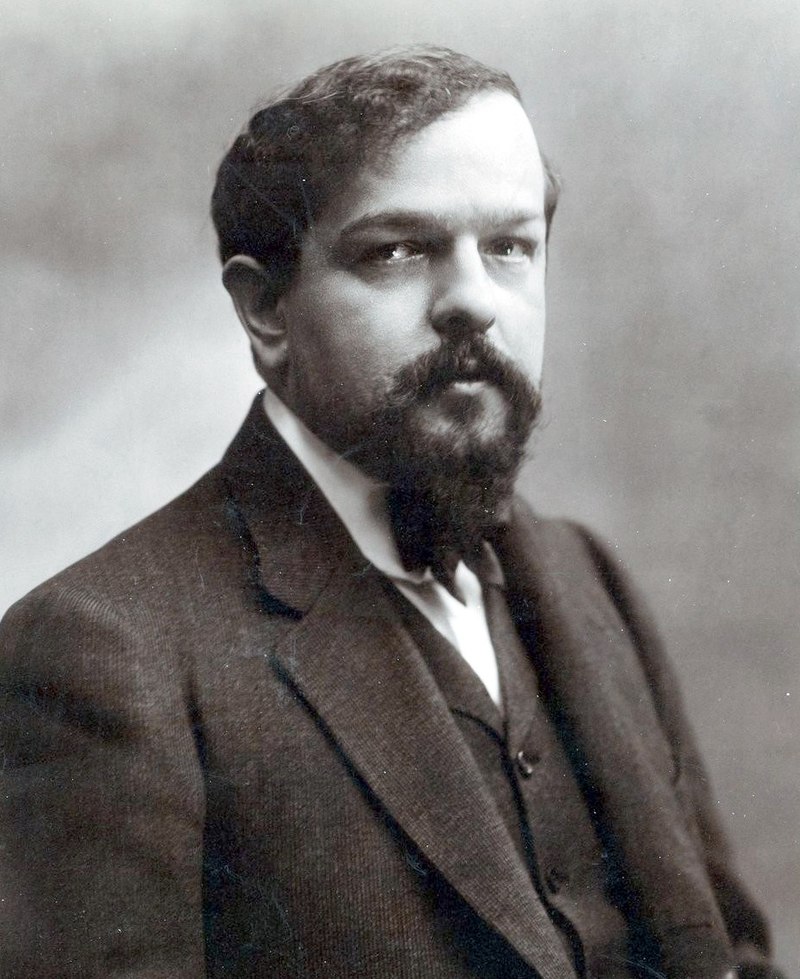
Claude Debussy(French:22 August 1862– 25 March 1918) was a French composer. He is sometimes seen as the first Impressionist composer, although he vigorously rejected the term. He was among the most influential composers of the late 19th and early 20th centuries.
Born to a family of modest means and little cultural involvement, Debussy showed enough musical talent to be admitted at the age of ten to France’s leading music college, the Conservatoire de Paris. He originally studied the piano, but found his vocation in innovative composition, despite the disapproval of the Conservatoire’s conservative professors. He took many years to develop his mature style, and was nearly 40 when he achieved international fame in 1902 with the only opera he completed, Pelléas et Mélisande.
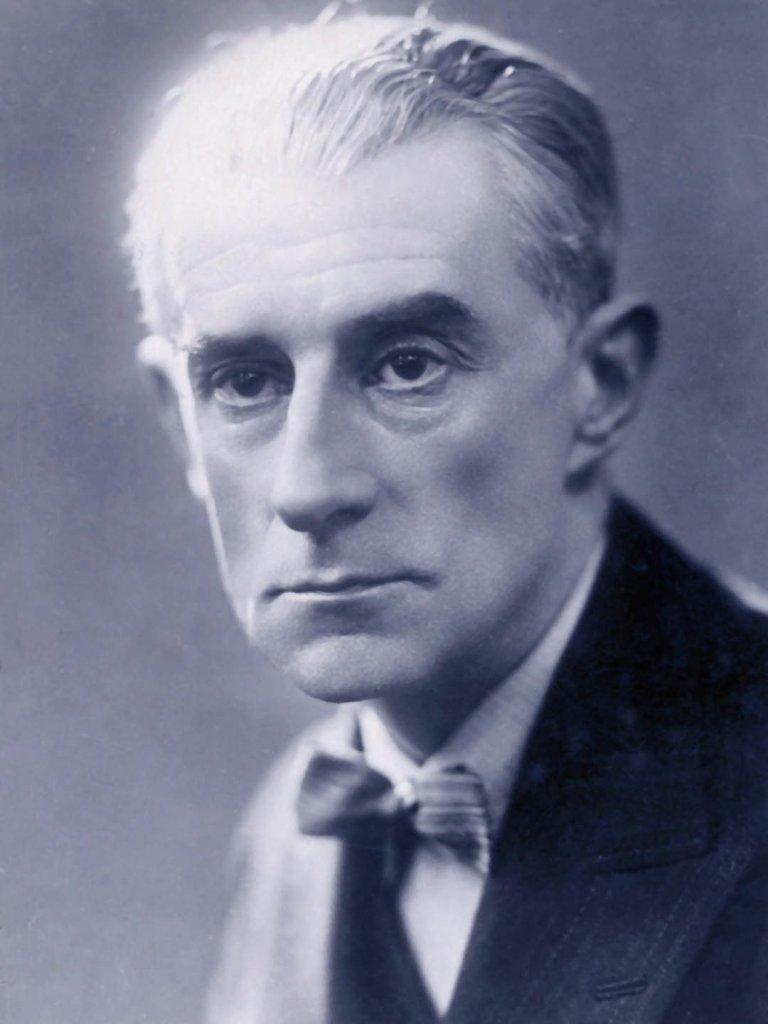
Joseph Maurice Ravel (French; 7 March 1875 – 28 December 1937) was a French composer, pianist and conductor. He is often associated with impressionism along with his elder contemporary Claude Debussy, although both composers rejected the term. In the 1920s and 1930s Ravel was internationally regarded as France’s greatest living composer.
Born to a music-loving family, Ravel attended France’s premier music college, the Paris Conservatoire; he was not well regarded by its conservative establishment, whose biased treatment of him caused a scandal. After leaving the conservatoire, Ravel found his own way as a composer, developing a style of great clarity and incorporating elements of modernism, baroque, neo classicism and, in his later works, jazz. He liked to experiment with musical form, as in his best-known work, Boléro (1928), in which repetition takes the place of development. Ravel, who was acclaimed as a master of orchestration, made some orchestral arrangements of other composers’ music, of which his 1922 version of Mussorgsky’s Pictures at an Exhibition is the best known.
Workshops kindly funded by the Adelaide Health Foundation, Community Health Initiative Scheme 2019
Supported by The Alzheimer’s Society of Ireland. Special thanks to Alan Carrick, Mary Mooney, Silva Schwer and all the staff, clients and friends of Rose Cottage.

 Art and Dementia projects