
Research behind the inspiration:
When I began to research the background for the first workshop I decided to start with the more obvious place where one would find stained glass windows – the church. This led me to the very interesting research of the Symbolism Behind Stained Glass Colour in Churches:
In Eastern Europe and many countries, including Israel and the United States, brilliantly colored windows honor Biblical passages held in esteem by religious congregations and Christian leaders.
For that reason, “Poor Man’s Bible” is a popular phrase in modern days when discussing stained glass windows. During medieval times, the poor were mostly illiterate and could not afford Bibles. Therefore, the depiction of Biblical events in stained glass windows was a source for the illiterate to understand the events and lessons in the Bible. In addition to similar Biblical events, stained glass windows also share many other characteristics, such as the symbolism behind the usage of certain colors.
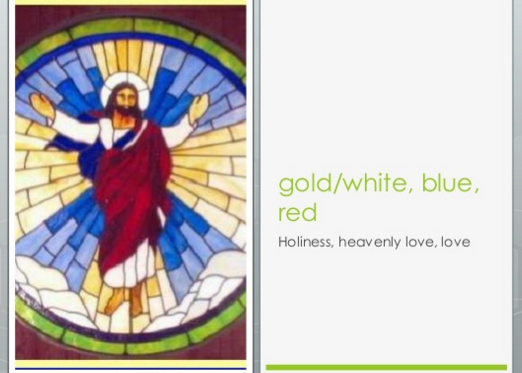
For example:
Red: represents the blood of Christ, it indicates strong emotions such as love or hate; it serves as a reminder of Jesus’ suffering and sacrifice, it also often associated with the martyrdom of saints.
Blue: the color of the sky symbolizes heaven, hope, sincerity, and piety. The color is often associated with the Virgin Mary.
Green: the color of grass and nature is an indication of spring, growth and rebirth, life over death; it symbolizes faith, immortality, and contemplation.
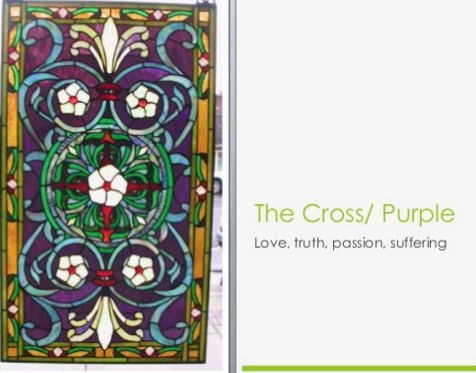
Violet: symbolizes love, truth, passion, and suffering.
White: the color that represents chastity, innocence, and purity is often associated with God.
Black: it is somewhat rare to see black as the focus color in a stained glass window; the color has close ties to death and regeneration.
Yellow: although the color is sometimes used to symbolize treachery, such as in depictions of Judas, it is more widely used to indicate the halo of saints, or the Gates of Heaven and to symbolize divinity, power and glory.
Purple: it is believed that Christ wore purple before His crucifixion so the color has come to symbolize suffering and endurance; purple is also used to depict royalty or God the Father.
Gray: a symbol of humility and mourning, it also represents the immortality of the spirit.
Brown: the symbol of spiritual death and renunciation of worldly things.
Rainbow: symbolizes union and God’s covenant with humanity.
Workshops kindly funded by the Adelaide Health Foundation, Community Health Initiative Scheme 2019
Supported by The Alzheimer’s Society of Ireland. Special thanks to Alan Carrick, Mary Mooney, Silva Schwer and all the staff, clients and friends of Rose Cottage.

 Art and Dementia projects